

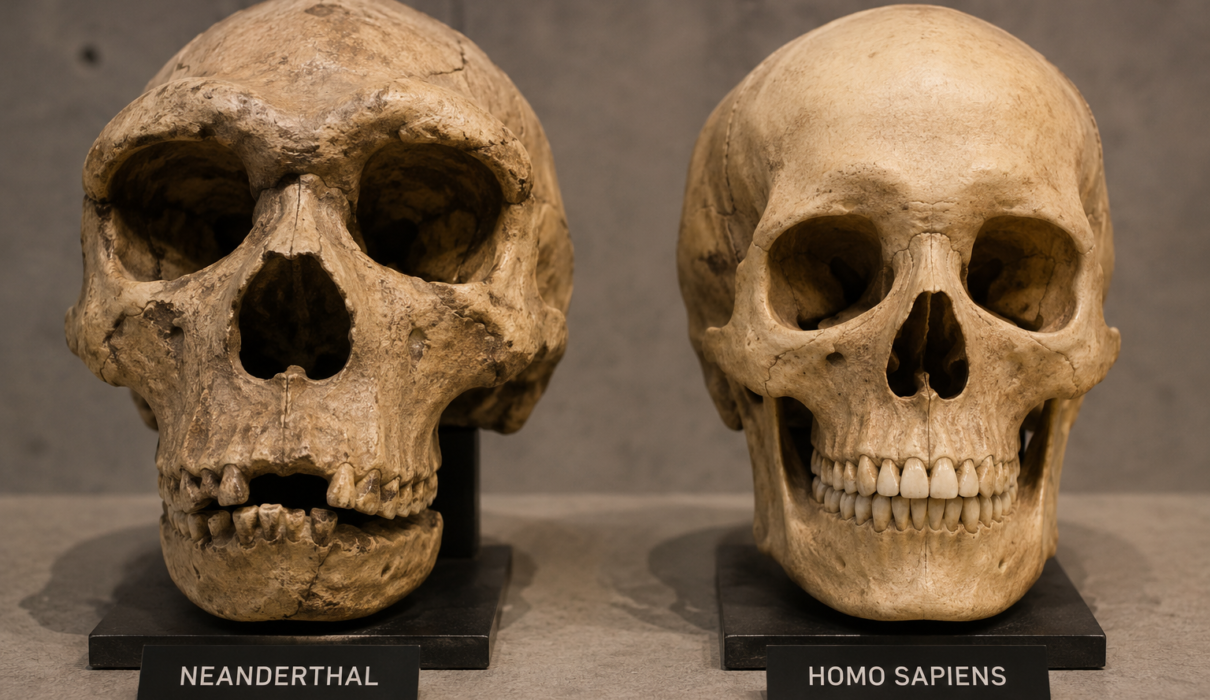
Did Homo sapiens and Neanderthals interbreed? For most of history, scientists thought the answer was a flat “no.” Neanderthals were imagined as primitive brutes too different from us to ever mix.
Then DNA science changed everything.
In 2010, geneticist Svante Pääbo and his team at the Max Planck Institute published the first Neanderthal genome. Their verdict was stunning: people of non-African ancestry carry Neanderthal DNA in their bodies right now proof that our ancestors absolutely did interbreed with Neanderthals.
But here’s what’s even more shocking. A 2024 Princeton University study published in Science showed this wasn’t a single accidental meeting. It happened in at least three separate waves over nearly 250,000 years.
This article is your complete, science-backed guide. Every claim below links to a peer-reviewed paper or a named institution. No invented facts. No fluff. Just the real, astonishing story of how Homo sapiens and Neanderthals became family.
Key Takeaways
- Yes — Homo sapiens and Neanderthals did interbreed. 1–4% of the DNA of every non-African person alive today is Neanderthal. (Smithsonian Institution, 2024)
- The main interbreeding window lasted ~7,000 years, centred around 47,000 years ago, confirmed by two independent studies in Nature and Science (December 2024).
- A Princeton/Southeast University study in Science (2024) identified three separate waves of contact: 200–250 kya, 100–120 kya, and 50–60 kya.
- Neanderthal genes still affect 47 traits in modern humans, including immune response, skin colour, metabolism and even COVID-19 risk. (Cornell University / eLife, 2023)
- In 2026, a Science study confirmed that most interbreeding involved Neanderthal males and Homo sapiens females.
Table of Contents
The DNA Proof: How Scientists Know Did Homo Sapiens and Neanderthals Interbreed
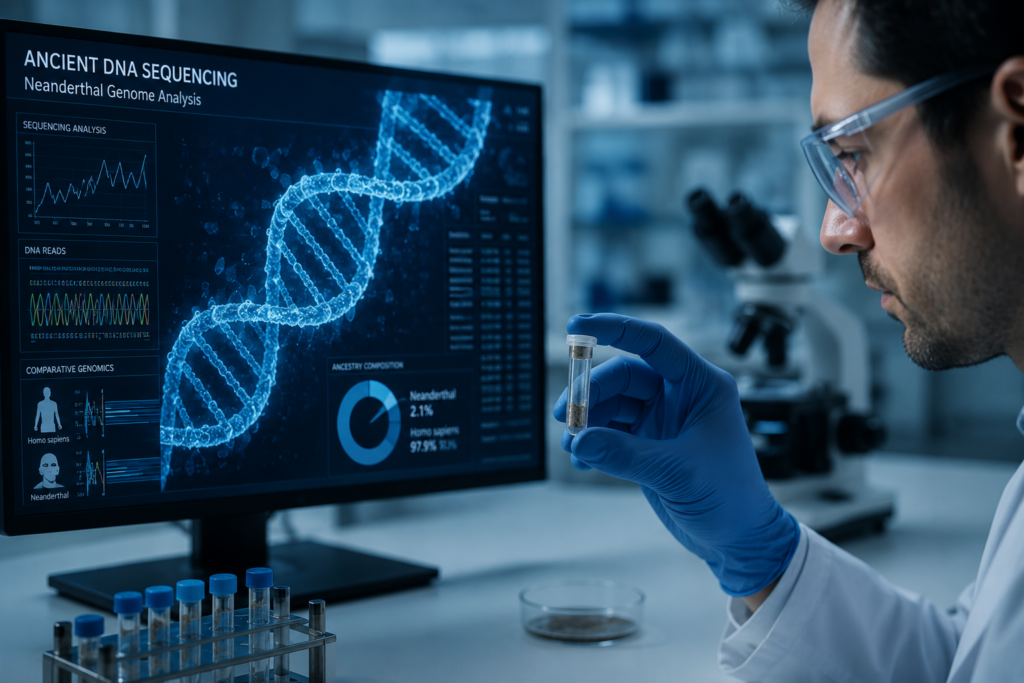
Before DNA technology, this was a guessing game. Some fossils looked “hybrid-ish.” Anthropologists argued for decades. Then in 2010, Svante Pääbo’s team published the first-ever Neanderthal genome and the argument was over.
They found that non-African people share 1–4% of their DNA with Neanderthals. That DNA didn’t come from a common ancestor millions of years ago. It’s too recent, too specific. It came from actual interbreeding after Homo sapiens left Africa.
The Smithsonian Institution’s Human Origins Program confirms this directly:
“Modern humans and Neanderthals are different species, yet despite being recognised as different species, it is still possible and we now know it did happen that members of the two species exchanged genetic information”.
This DNA exchange is called introgression the technical word for genes flowing from one species into another through interbreeding. And it wasn’t a tiny, negligible trace. Across billions of living people, those Neanderthal gene segments add up to a staggering amount of ancient DNA still actively shaping human biology.
Want to understand more about the ancient human species that walked this earth before us? Read our deep-dive: What Human Species Existed Before Us?
When Did Homo Sapiens and Neanderthals Interbreed?
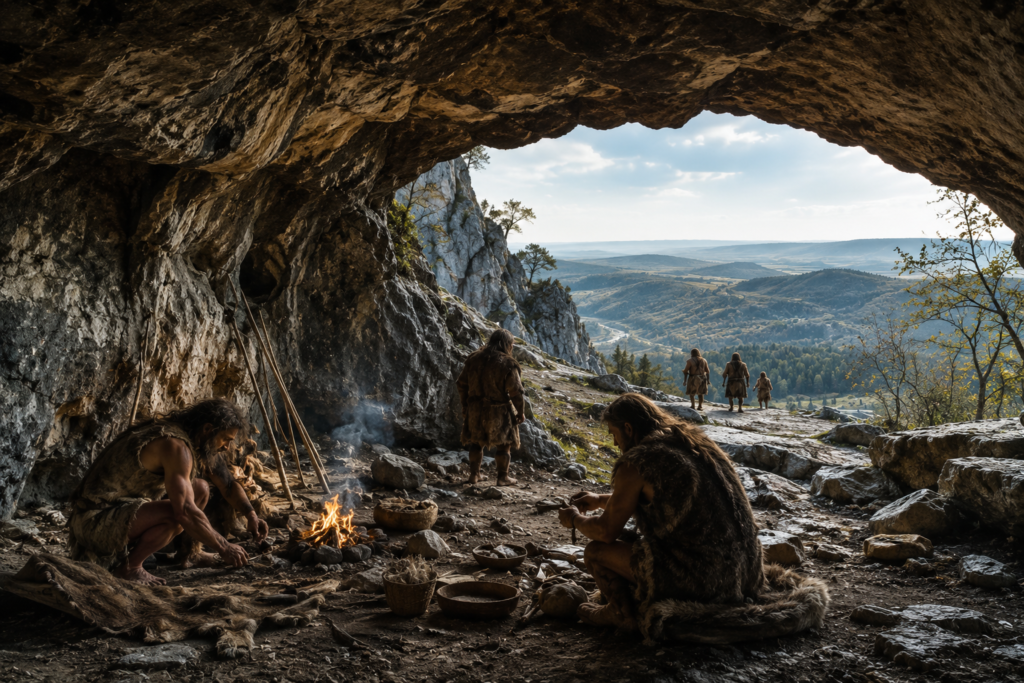
For years, scientists knew that interbreeding happened. The harder question was when. Two landmark studies, published simultaneously in Nature and Science in December 2024, finally gave us the most precise answer ever.
Both studies reached nearly the same conclusion independently. The main period of interbreeding between Homo sapiens and Neanderthals lasted roughly 7,000 years, centred around 47,000 years ago beginning about 50,500 years ago.
“A new analysis of DNA from ancient modern humans in Europe and Asia determined, more precisely than ever, the time period during which Neanderthals interbred with modern humans, starting about 50,500 years ago and lasting about 7,000 years until Neanderthals began to disappear.”
The key to this breakthrough was a 45,000-year-old skull found in Germany (at Ranis Castle) and another ancient skull called Zlaty kun from Czechia. Sequencing their DNA revealed exactly when their Neanderthal ancestry was acquired and how long those DNA segments had been getting shorter (which happens naturally over generations). From this, researchers could work backward and calculate the precise interbreeding window.
Professor Johannes Krause, co-author of the Nature paper, noted this event was thousands of years more recent than previous estimates meaning modern humans left Africa and encountered Neanderthals later than once thought.
The 3 Waves of Interbreeding — Shocking New 2024 Discovery
Here’s where things get truly astonishing. For years, the standard answer to did Homo sapiens and Neanderthals interbreed was: “Yes, once, around 50,000 years ago.” Clean, simple.
That story is now out of date.
Princeton University’s Professor Joshua Akey and Southeast University’s Professor Liming Li led a team that used an AI-powered tool called IBDmix to comb through the genomes of 2,000 living humans plus three Neanderthals and one Denisovan. What they found was extraordinary: three distinct waves of interbreeding spanning nearly a quarter million years.
- Wave 1 (~200,000–250,000 years ago): The earliest known contact happening almost immediately after Homo sapiens first evolved in Africa. This means humans were leaving Africa far earlier than most models predicted.
- Wave 2 (~100,000–120,000 years ago): A second migration wave that brought humans into Neanderthal territory again, leaving another genetic trace.
- Wave 3 (~50,000–60,000 years ago): The largest and most consequential wave. This is the one that contributed the bulk of Neanderthal DNA found in living non-African humans today.
Professor Akey described the picture this paints: “Our models show that there wasn’t a long period of stasis, but that shortly after modern humans arose, we’ve been migrating out of Africa and coming back to Africa, too.”
Source: Princeton University via ScienceDaily, July 2025 — sciencedaily.com
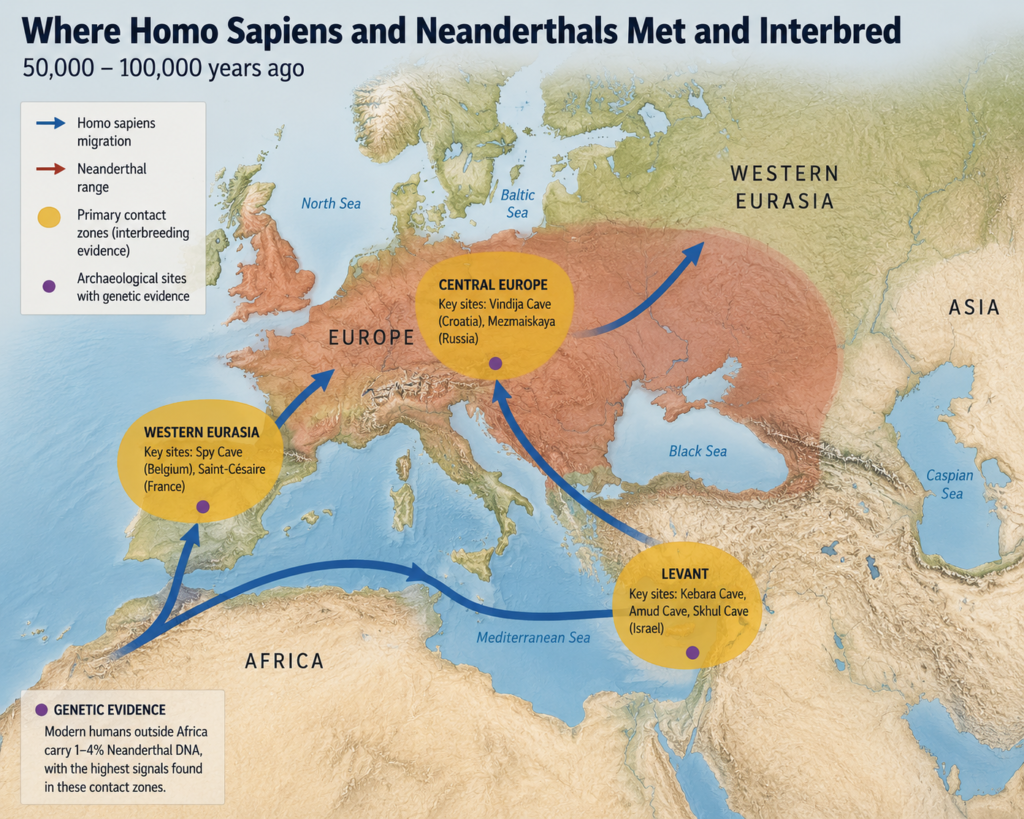
Where Did Homo Sapiens and Neanderthals Meet and Interbreed?
Neanderthals didn’t live in Africa. They lived across Europe and western Asia from Portugal to Siberia. So any interbreeding had to happen outside Africa, after Homo sapiens migrated out.
The main meeting zones scientists have identified include:
- The Levant (modern-day Israel, Lebanon, Palestine): One of the earliest contact zones. Fossil evidence from Skhul Cave (Israel) shows Homo sapiens were present there around 100,000 years ago geographically overlapping with Neanderthals. A 2025 study in L’Anthropologie suggested some remains at Skhul show physical features consistent with possible interbreeding.
- Central Europe: The Ranis Castle site in Germany (45,000-year-old H. sapiens fossils) is now considered one of the key locations where the major Wave 3 interbreeding took place. Scientists found these early modern humans lived in very cold conditions alongside or near Neanderthals.
- Western Eurasia generally: The Science December 2024 paper confirmed that all modern non-African humans descend from a single population living in Europe around 47,000 years ago — the same population that interbred with Neanderthals most heavily.
Source: Smithsonian Magazine, January 2025 — smithsonianmag.com
Curious about how those early humans survived the harsh conditions they encountered on these journeys? Explore our article: How Did Early Humans Start Fire?
What Neanderthal DNA Is Still Doing Inside You Right Now
This is the part that makes the whole story personal.
If you’re of non-African ancestry, roughly 1–2% of your genome right now is Neanderthal. That might sound tiny, but it isn’t. A Cornell University study published in eLife (2023) found that 4,303 specific Neanderthal DNA variants are actively influencing 47 measurable traits in modern humans — from calorie burn rate to immune response to disease risk.
The Good: Neanderthal Genes That Helped Us Survive
- Immune system boost: Neanderthals had been living outside Africa for hundreds of thousands of years and had built-up defences against Eurasian pathogens. When Homo sapiens arrived and interbred, they inherited some of this hard-won immunity. UC Berkeley researchers confirmed that many high-frequency Neanderthal genes in modern humans relate to immune function.
- COVID-19 protection: A specific Neanderthal haplotype on chromosome 12 reduces the risk of severe COVID-19 by approximately 22%. This protective variant is carried by roughly 30% of South Asians and is found across many Eurasian populations. VERIFIED DATA
Source: PMC / PNAS 2021 - Skin and hair adaptation: Genes for skin pigmentation and hair characteristics from Neanderthals increased in frequency after admixture — likely because they helped Homo sapiens adapt to lower-UV European climates.
- Allergy response: Three Neanderthal immune-related genes spread widely in modern humans and appear to strengthen the innate immune system the body’s first line of defence.
Source: American Journal of Human Genetics, 2016 sciencedaily.com
The Bad: Neanderthal Gene Risks We Inherited Too
- Severe COVID-19 risk: A different Neanderthal haplotype on chromosome 3 is linked to increased risk of severe COVID-19 requiring hospitalisation. This is a textbook example of the same ancestral source giving both benefit and harm depending on the specific variant and context.
- DNA virus susceptibility: A May 2026 study in Genome Biology and Evolution found that Neanderthal ancestry is linked to higher loads of certain DNA viruses (including Epstein-Barr virus) in modern populations suggesting reduced immune control over some persistent viruses.
- Arthritis risk: One Neanderthal-linked region in the human genome has been associated with higher risk of arthritis in modern humans. (Cornell University / eLife 2023)
Did Interbreeding Help Cause Neanderthal Extinction?
Neanderthals vanished from the fossil record around 40,000 years ago just a few thousand years after the main wave of interbreeding with Homo sapiens. Was this a coincidence?
Probably not entirely. Scientists have identified several contributing factors:
- Demographic swamping: Homo sapiens arrived in much larger numbers. Princeton’s Professor Akey put it memorably: “Modern humans were essentially like waves crashing on a beach, slowly but steadily eroding the beach away. Eventually we just demographically overwhelmed Neanderthals and incorporated them into modern human populations.”
Source: Princeton University / ScienceDaily, July 2025 — sciencedaily.com - Genetic load: A 2026 study in Science confirmed that after waves of gene flow from Homo sapiens into Neanderthals, Neanderthal Y chromosomes and mitochondrial DNA were effectively replaced. Their genetic identity was being eroded from within.
- Competition for resources: As Homo sapiens spread, they likely competed with Neanderthals for the same animals, caves, and territories.
- Climate instability: Rapid climate swings around 40,000 years ago stressed Neanderthal populations that were already small and scattered.
The honest modern scientific view is that Neanderthals didn’t so much go extinct as they were slowly absorbed into the Homo sapiens population. In a very real sense, they didn’t disappear. Part of them is still here in us.
Did Homo sapiens and Neanderthals interbreed more than once?
Yes — at least three times. A 2024 Princeton University study in Science identified waves of contact at approximately 200,000–250,000 years ago, 100,000–120,000 years ago, and most significantly around 50,000–60,000 years ago. The third wave was the largest and accounts for most Neanderthal DNA in living humans today.
How much Neanderthal DNA do modern humans carry?
People of non-African ancestry carry approximately 1–4% Neanderthal DNA, confirmed by the Smithsonian Institution’s Human Origins Program (2024). A 2020 study also found that small amounts of Neanderthal DNA exist even in African populations, likely from migration back into Africa. The exact percentage varies by geographic ancestry.
What diseases or traits are linked to Neanderthal DNA?
Cornell University researchers (eLife, 2023) found 4,303 active Neanderthal DNA variants influencing 47 traits including immune function, metabolism, and skin pigmentation. One Neanderthal gene reduces severe COVID-19 risk by ~22% (PNAS, 2021). Others are linked to increased risk of arthritis, certain DNA viruses, and immune variation.
Were Neanderthals a separate species from Homo sapiens?
Officially yes — they are classified as Homo neanderthalensis. But the fact that they could produce fertile offspring with Homo sapiens blurs the species boundary significantly. Many geneticists now suggest the distinction is more of a subspecies relationship. The two lineages split approximately 600,000 years ago, according to Princeton’s 2024 research.
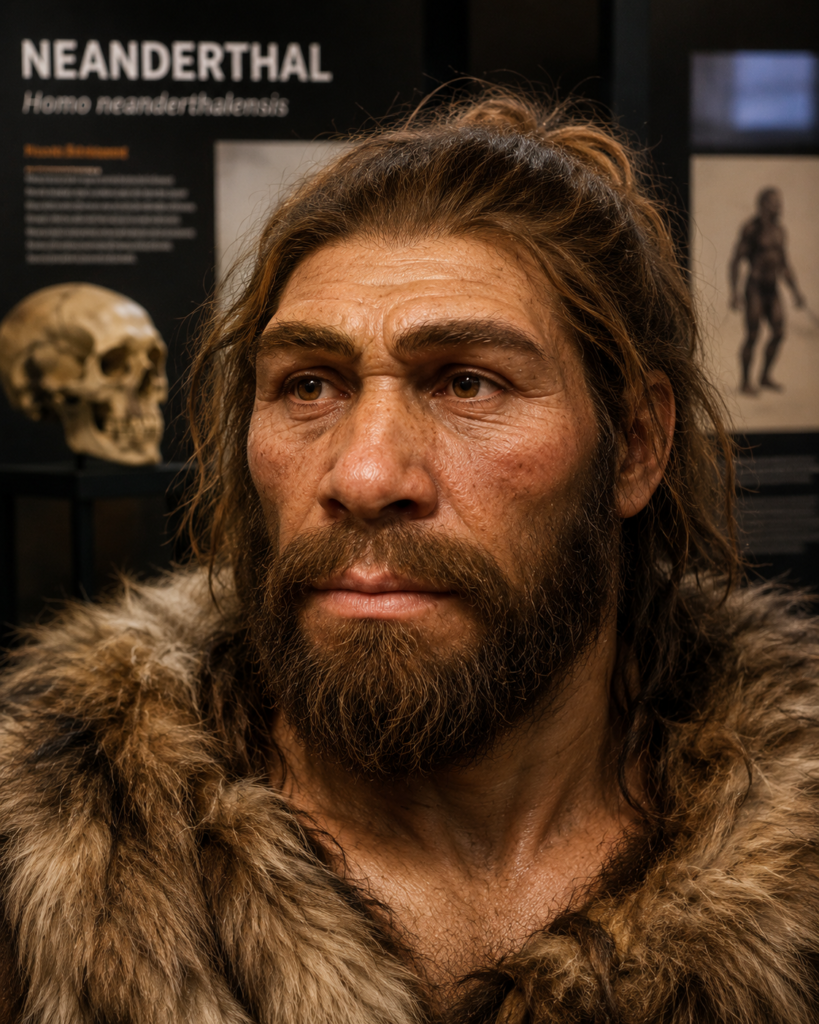
Who interbred with whom did Homo sapiens mate with Neanderthals, or the other way round?
A 2026 study published in Science found that the interbreeding was predominantly Neanderthal males mating with Homo sapiens females, based on analysis of X chromosomes. This conclusion was based on a comparative genomic analysis showing an excess of modern human DNA in Neanderthal X chromosomes. Whether these encounters were consensual is unknown.
The Astonishing Bottom Line
Did Homo sapiens and Neanderthals interbreed? They absolutely did and the story is far richer than scientists imagined even a decade ago.
- It happened at least three times over 200,000 years — not once.
- The main wave started ~50,500 years ago and lasted about 7,000 years.
- 1–4% of every non-African person’s genome is Neanderthal DNA right now.
- 4,303 Neanderthal variants are actively shaping 47 traits in modern humans including COVID-19 immunity.
- Neanderthals didn’t truly go extinct. They were absorbed and live on inside us.
The next time someone calls Neanderthals “primitive,” remember: some of their genes are probably protecting you from disease right now. We are, quite literally, part Neanderthal.
